
- prev
- next
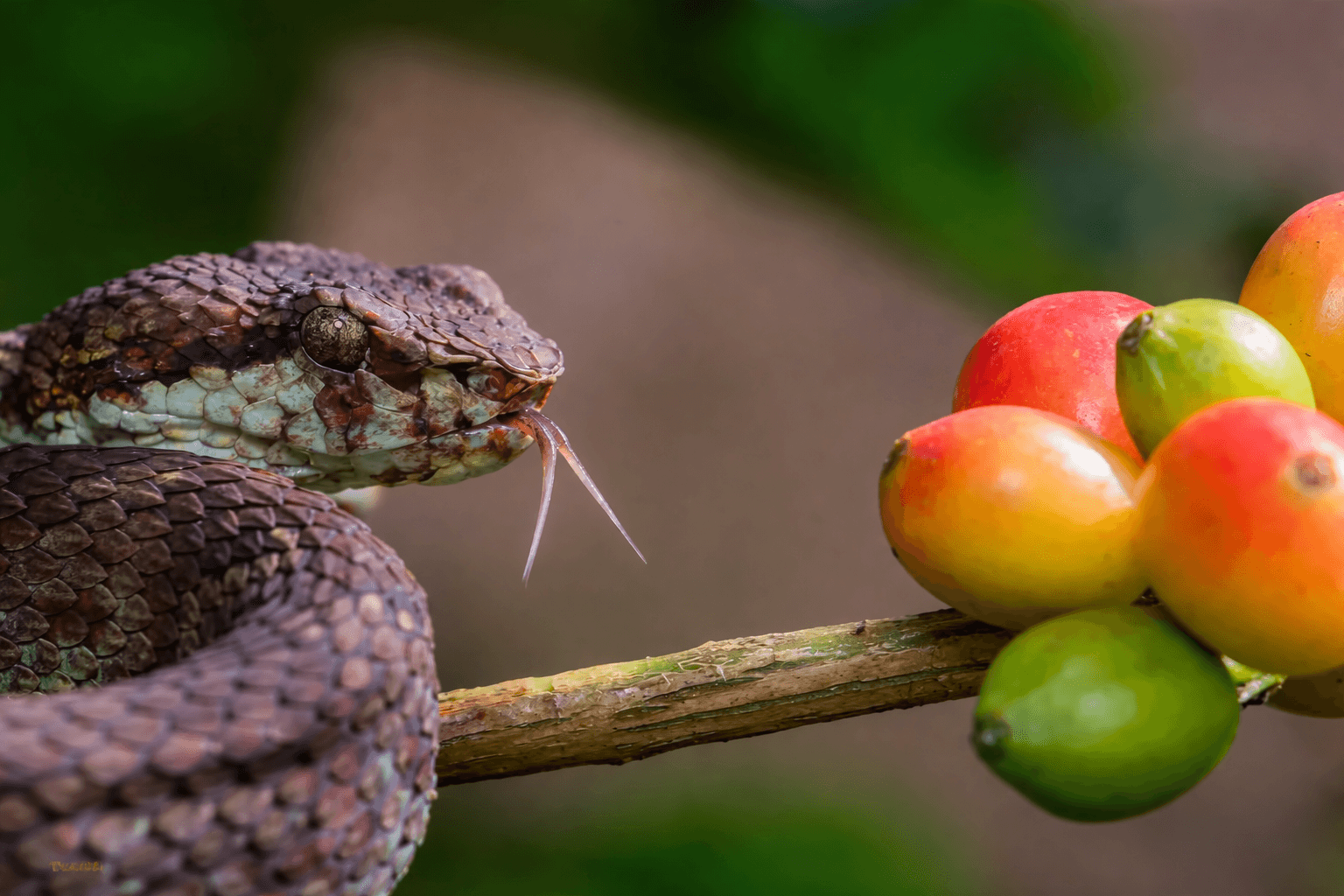
Common Name: Malabar Pit Viper
Trimeresurus malabaricus
Location: Ponnampet, Karnataka, India
Sighting date: March 14, 2019
Photographer

Field Observation
The Malabar Pit Viper (Trimeresurus malabaricus) is one of the most distinctive venomous snakes found in the Western Ghats of India. Known for its striking coloration, triangular head and ambush hunting behaviour, this species is an important predator within forest and plantation ecosystems.
The Malabar Pit Viper belongs to the family Viperidae and the subfamily Crotalinae, commonly known as pit vipers. Like other pit vipers, this species possesses specialized heat-sensing organs located between the eye and nostril on each side of the head. These organs allow the snake to detect infrared radiation from warm-blooded prey, making it an efficient nocturnal hunter.
Adult Malabar Pit Vipers typically grow to lengths of about 60 to 90 centimetres, although some individuals may reach slightly larger sizes. The body is relatively stout with strongly keeled scales that give the snake a rough texture. One of the most remarkable characteristics of this species is its wide variation in colour. Individuals may appear bright green, olive green, yellowish brown, grey or even reddish brown. This colour variation allows the snake to blend effectively with moss-covered rocks, tree bark and forest leaf litter.
A distinctive triangular head, vertical pupils and a short tail are typical features of the Malabar Pit Viper. Many individuals also display irregular dark patterns or bands across the body, further enhancing their camouflage within dense vegetation.
The Malabar Pit Viper is primarily a nocturnal species. During the day it usually remains motionless on low branches, shrubs, rocks or among leaf litter. At night it becomes active and hunts small prey such as frogs, lizards, birds and small mammals. Its hunting strategy relies on patience rather than speed. The snake often waits in ambush along forest paths, near streams or within dense vegetation until suitable prey comes within striking distance.
This species is endemic to the Western Ghats, one of the most important biodiversity hotspots in the world. It is widely distributed across forested regions of Karnataka, Kerala, Goa, Maharashtra and parts of Tamil Nadu. Because the Western Ghats contain a complex mosaic of forests, plantations and agricultural landscapes, the Malabar Pit Viper is frequently encountered in human-modified environments.
Shade-grown coffee estates and spice plantations often provide suitable habitats for this snake. Such plantations typically retain dense canopy cover, humidity and abundant prey species such as frogs and rodents. As a result, Malabar Pit Vipers are commonly observed along plantation paths, near estate streams and on low vegetation within coffee growing areas.
Despite being venomous, the Malabar Pit Viper is generally non-aggressive and prefers to remain still rather than flee when disturbed. Most bites occur accidentally when people step on or attempt to handle the snake. For this reason, estate workers and farmers are advised to exercise caution while walking through dense vegetation, particularly during the monsoon season when snake activity increases.
Ecologically, the Malabar Pit Viper plays an important role in controlling populations of small vertebrates such as rodents and amphibians. By maintaining balance within food webs, the species contributes to the overall health of forest and plantation ecosystems.
Documenting sightings of Malabar Pit Vipers in coffee estates, plantations and farms is valuable for understanding how reptiles use agricultural landscapes. Observations recorded through platforms like WildEstates can help researchers map species distribution, identify habitat preferences and better understand biodiversity in working landscapes.