- prev
- next
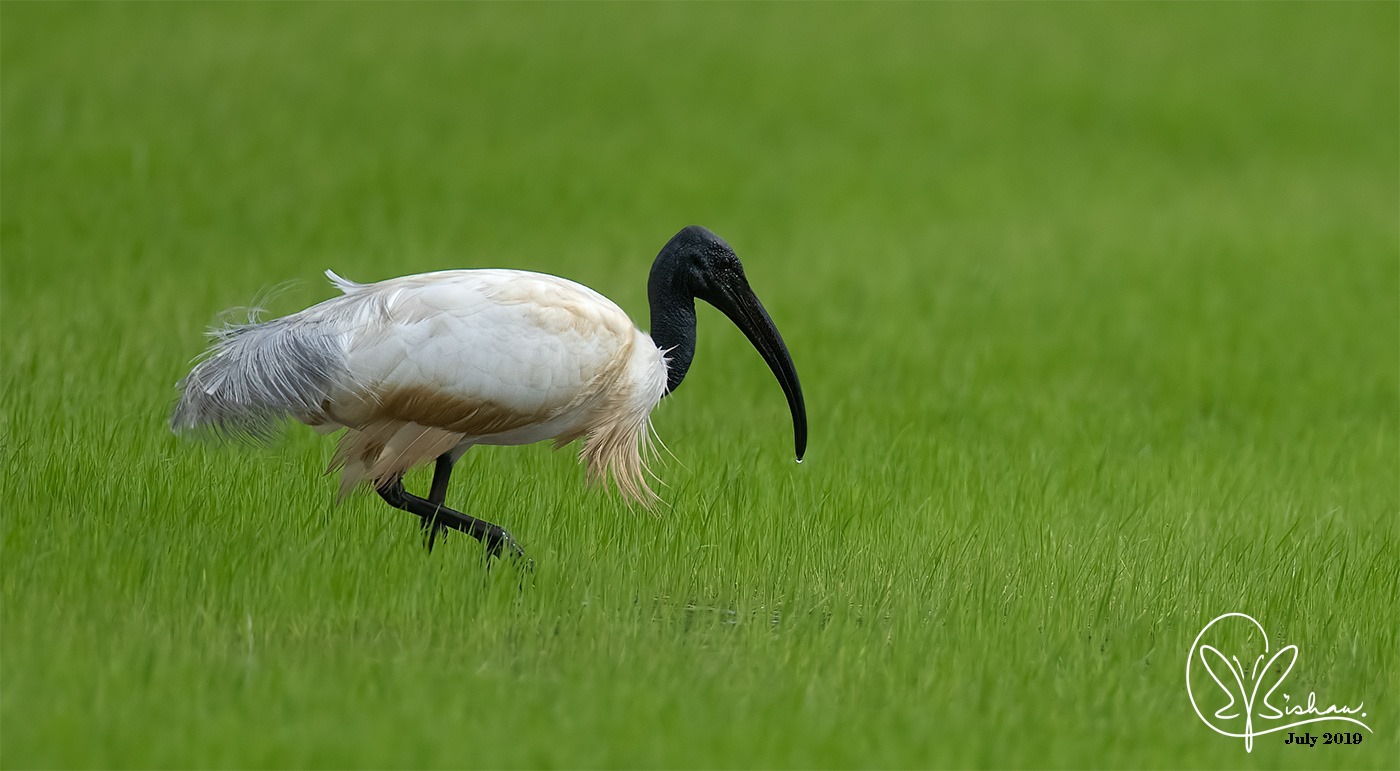
Common Name: Black-headed Ibis
Threskiornis melanocephalus
Location: 571103, Hunsur, Karnataka, India
Sighting date: July 6, 2019
Photographer

Field Observation
A Black-headed Ibis observed foraging actively in a rice paddy in Kodagu during July, moving deliberately through young rice shoots with bill angled towards the waterlogged soil. The bird's striking white plumage, naked black head and neck and distinctively long down-curved black bill are clearly visible against the vivid green of the monsoon paddy. The ornamental grey plumes visible on the wing coverts suggest a bird in breeding or near-breeding condition — consistent with July, which falls within the monsoon nesting season for this species across peninsular India.
The Black-headed Ibis (Threskiornis melanocephalus), also known as the Oriental White Ibis or Indian White Ibis, is a large wading bird breeding across South and Southeast Asia from India east to Japan. Adults measure 65 to 76 centimetres in length. It is the only native ibis in its range with overall white plumage contrasted against a bare black head, neck and bill — making it one of the more unmistakable waterbirds of the Indian subcontinent. During the breeding season the ornamental tail feathers deepen to black and bare patches beneath the wing flush a vivid blood red.
Though often associated with wetlands, the Black-headed Ibis is a highly adaptable species that forages extensively in agricultural landscapes. Rice paddies are among its most important foraging habitats during the monsoon — the waterlogged fields providing easy access to invertebrates, frogs, small fish and aquatic insects that form its diet. In Kodagu, where rice cultivation and coffee estates share the landscape with forest edges and riparian corridors, the Black-headed Ibis moves freely between paddy fields, irrigation channels and wetland margins in search of food.
This record is a direct illustration of the coexistence that defines working agricultural landscapes in the Western Ghats. A Near Threatened waterbird foraging in a monsoon paddy — the rice field and the ibis sharing the same ground, each dependent on the seasonal flooding that connects the landscape.