- prev
- next
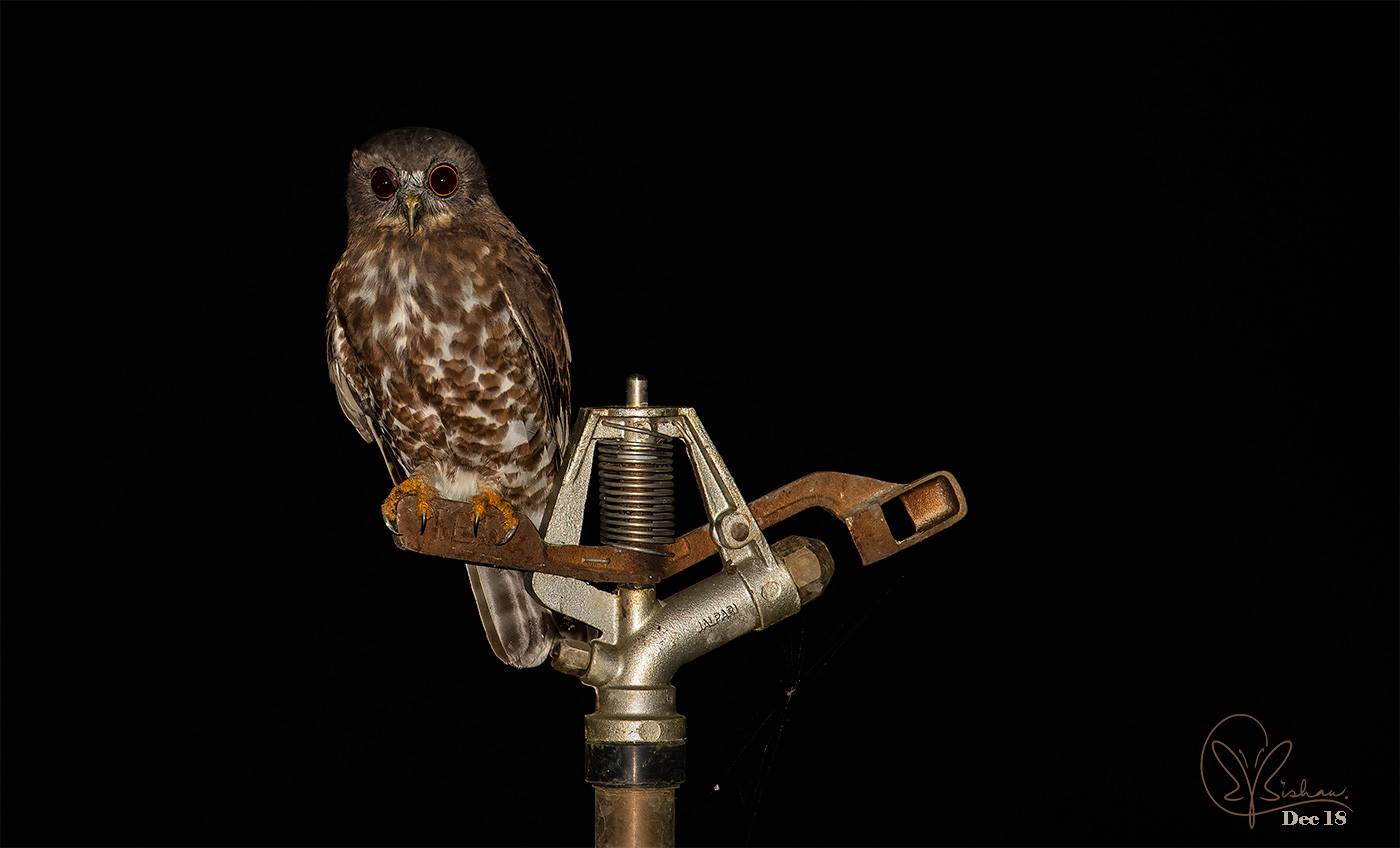
Common Name: Brown Boobook
Ninox scutulata
Location: Kutta, Ponnampet, Kodagu, Karnataka, India
Sighting date: December 18, 2018
Photographer
Field Observation
A Brown Boobook observed at night, perched on an estate irrigation sprinkler head in Kodagu. The bird faces the camera directly, displaying the characteristic large rounded head, the absence of ear tufts and the warm brown streaked plumage of the species. The deep rufous eyes are clearly visible, reflecting the camera light. The irrigation sprinkler — working estate infrastructure — serves here as an elevated nocturnal perch, placing this sighting unmistakably within a managed agricultural landscape.
The Brown Boobook (Ninox scutulata), also known as the Brown Hawk-Owl, is a resident breeder across tropical south Asia from India and Sri Lanka east to western Indonesia and south China. It is one of the more commonly encountered owls of the Western Ghats, though more often heard than seen — its distinctive two-note call carrying clearly through forest and estate canopy after dark. The large forward-facing eyes and hawk-like build distinguish it readily from the smaller owlets of the region.
Found in wooded habitats including forest edges, moist deciduous forest and well-canopied plantation landscapes, the Brown Boobook is a versatile nocturnal predator. On coffee and spice estates across the Western Ghats it is a regular presence after dark, hunting large insects, small reptiles, frogs and occasional small birds from elevated perches within the estate canopy. Its readiness to use man-made structures — as this photograph clearly shows — reflects the species' adaptability within working landscapes where tree cover and prey availability remain adequate.
The Brown Boobook nests in natural tree cavities and is a solitary breeder. On well-managed coffee estates in Kodagu, the retention of large native shade trees provides both nesting sites and the hunting perches this species relies on. The insect-rich environment of a shade-grown estate — particularly in the months following the monsoon — supports the prey base that draws nocturnal hunters like the Brown Boobook into estate interiors after dark.
This record is a precise illustration of the coexistence that defines the working landscapes of Kodagu. An irrigation sprinkler and an owl sharing the same frame after dark — evidence that the infrastructure of a coffee estate and the nocturnal life of the surrounding forest occupy the same ground without conflict.