
- prev
- next
Common Name: Asian Elephant
Elephas maximus
Location: Kodagu, Karnataka, India
Sighting date: June 1, 2022
Photographer
Field Observation
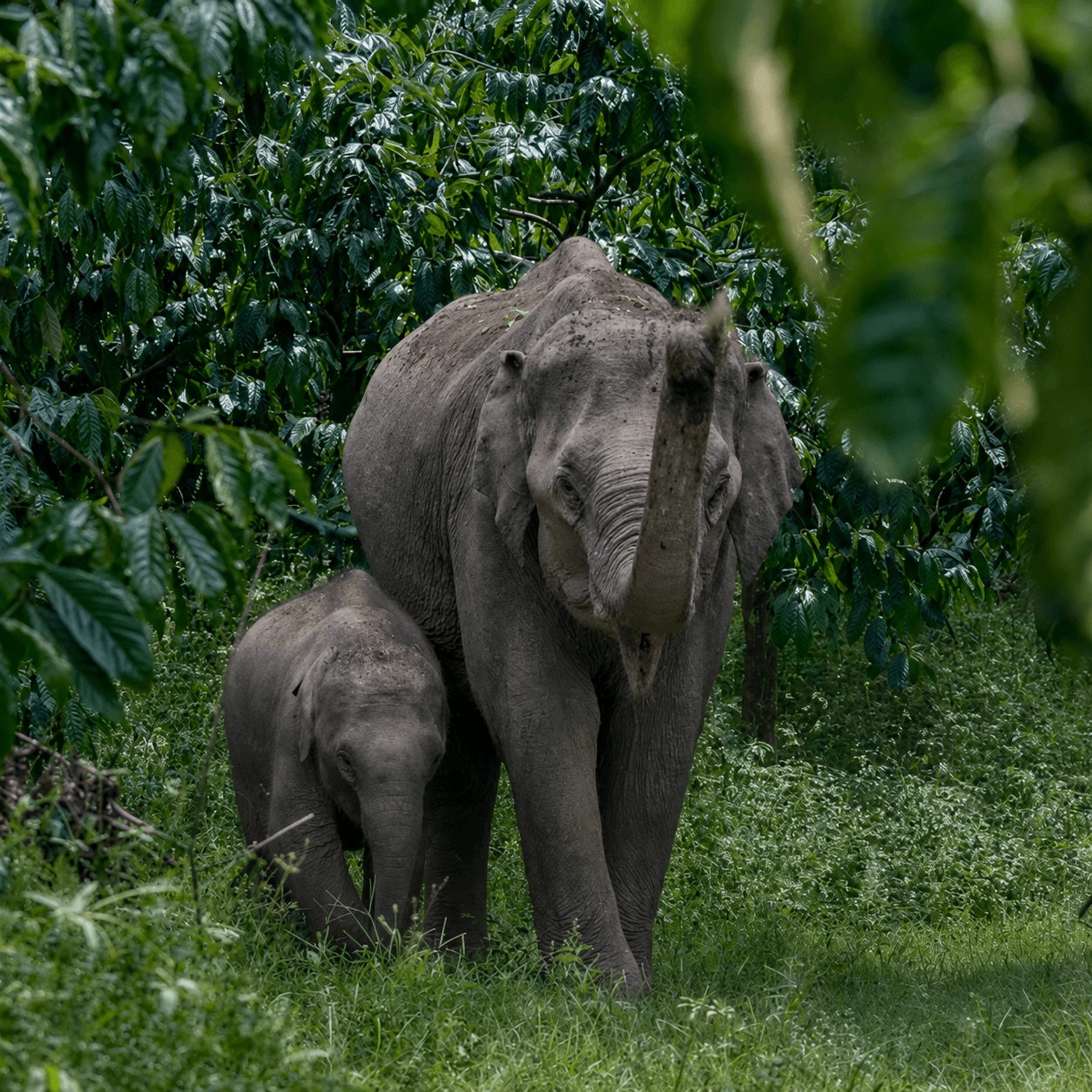
A female Asian Elephant and her very young calf observed moving through a coffee estate in Kodagu, surrounded by coffee plants in full canopy. The calf, estimated to be only weeks old, walks in close contact with its mother — tucked against her front legs in the characteristic protective position of newborn elephants within a herd. The mother's attention is directed outward, alert and watchful. The coffee plants frame the pair on all sides, placing this sighting unmistakably within the interior of a working estate rather than at its edge.
The Asian Elephant (Elephas maximus) is the largest land animal in Asia and one of the most ecologically significant species of the Western Ghats. Kodagu sits within one of India's most critical elephant landscapes — a mosaic of forest reserves, wildlife corridors and working estates that together form part of the Brahmagiri-Nilgiris-Eastern Ghats elephant range, one of the largest contiguous elephant habitats remaining in Asia. The movement of elephants through coffee estates in Kodagu is not an aberration — it is a continuation of ancient migratory routes that predate the estates themselves.
A mother with a newborn calf is among the most significant sightings possible within this landscape. Elephants do not give birth casually — they choose locations where they feel secure, where food and water are accessible and where the level of disturbance is low enough to allow a vulnerable newborn to survive its first critical weeks. The fact that this birth occurred within or immediately adjacent to a working coffee estate in Kodagu speaks directly to the quality and continuity of the habitat the estate maintains.
The coexistence of elephants and coffee cultivation in Kodagu is one of the most complex and consequential human-wildlife relationships in India. Elephants cause significant crop damage and occasionally fatal encounters occur. Yet the estates also provide food — coffee pulp, shade tree fruits, grass — and movement corridors that connect fragmented forest patches. The relationship is not simple. It is not comfortable. But it is real, it is enduring, and it is precisely what Wild Estates exists to document.
This photograph — a mother and her newborn calf among the coffee plants of Kodagu — is the most direct expression of the archive's purpose. Where people and wildlife share the land.