
- prev
- next
Common Name: Asian Elephant
Elephas maximus
Location: 571250, Ponnampet, Karnataka, India
Sighting date: June 12, 2014
Photographer
Field Observation
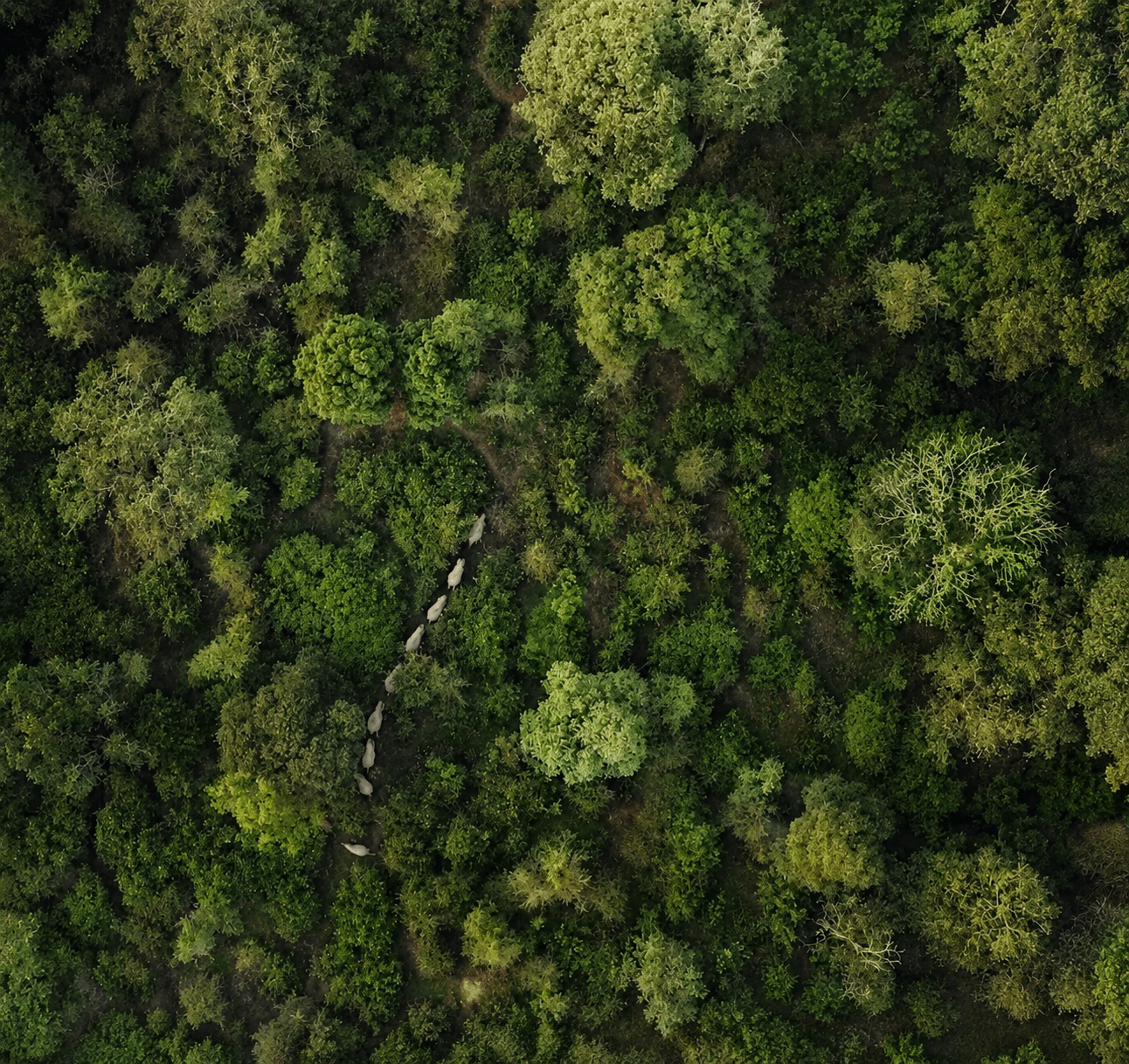
A herd of Asian Elephants observed moving in single file through dense forest canopy in Kodagu, photographed from aerial height. Approximately eight to ten individuals are visible threading through a narrow forest corridor between the trees, the canopy closing over them on both sides. The aerial perspective reveals what ground-level observation cannot — the herd as a coherent unit, moving with purpose through the forest interior, following a route that cuts through the canopy in a line that speaks of repeated use over many years. This is not random movement. This is a corridor.
The Asian Elephant (Elephas maximus) is a landscape-scale species. Individual home ranges in the Western Ghats can extend across hundreds of square kilometres, encompassing forest reserves, wildlife sanctuaries, plantation landscapes and human settlements. Herds move seasonally between food and water sources along routes established over generations — routes that predate the roads, estates and settlements that now intersect them. The corridor visible in this photograph is one such route — a gap in the canopy worn by the passage of elephant herds over decades, possibly centuries.
Kodagu sits at the heart of one of Asia's most significant elephant landscapes. The Brahmagiri-Nilgiris-Eastern Ghats elephant range, of which Kodagu forms a critical part, supports one of the largest contiguous elephant populations remaining in Asia. The forests of Coorg connect the protected areas of Nagarhole and Brahmagiri to the north and south, and the movement of herds through this landscape depends on the maintenance of forest cover and habitat connectivity across both protected and unprotected land — including the coffee estates and forest edges that make up much of Kodagu's working landscape.
This aerial record documents something that most wildlife photographs cannot — the relationship between the elephant and the landscape at scale. Not a single animal, not a close encounter, but a herd moving through a forest corridor, the canopy arching over them, the landscape absorbing their passage as it has for centuries. The coffee estates of Kodagu border and intersect these corridors. What happens on those estates — how they are managed, what tree cover they maintain, how they respond to elephant presence — directly determines whether corridors like this one remain passable.
This is what Wild Estates exists to document. Not just the animal in the frame, but the landscape that makes the animal possible.