- prev
- next
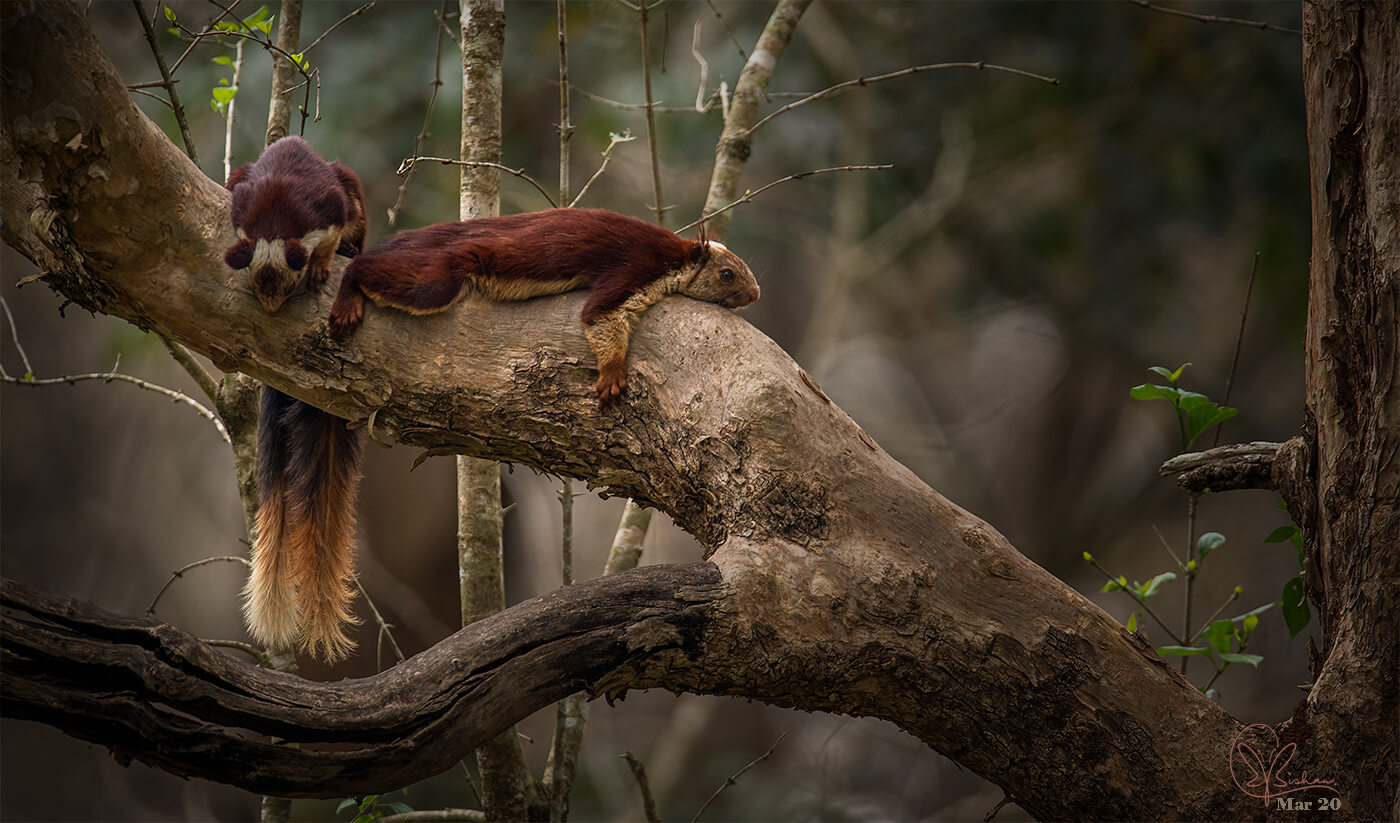
Common Name: Malabar Giant Squirrel
Ratufa indica
Location: Gonikoppal, Ponnampet, Kodagu, Karnataka, India
Sighting date: February 24, 2019
Photographer
Field Observation
The Malabar Giant Squirrel (Ratufa indica), also known as the Indian Giant Squirrel, is one of the most spectacular tree-dwelling mammals found in the forests of India. With its striking multi-coloured fur, large bushy tail and remarkable agility among the treetops, this squirrel is one of the most visually distinctive species inhabiting the Western Ghats biodiversity hotspot.
The Malabar Giant Squirrel belongs to the genus Ratufa, which includes some of the largest squirrels in the world. Adults typically measure between 60 and 90 centimetres in total length, including their long tail, and can weigh up to two kilograms. Unlike the smaller squirrels commonly seen in urban areas, this species is entirely arboreal and spends most of its life high in the forest canopy.
One of the most remarkable features of the Malabar Giant Squirrel is its colourful fur. The species displays a wide range of colour combinations including deep maroon, dark brown, beige, orange, cream and black. This dramatic coloration makes it one of the most beautiful squirrels in the world and easily distinguishable from other rodent species found in India.
The long, bushy tail of the Malabar Giant Squirrel plays an important role in balance while moving through the trees. These squirrels are capable of making impressive leaps of up to six metres between branches, allowing them to travel efficiently through the forest canopy without descending to the ground. Their strong limbs and sharp claws provide excellent grip while climbing tall trees.
Malabar Giant Squirrels are primarily herbivorous and feed on a variety of plant materials. Their diet includes fruits, nuts, seeds, tree bark, flowers and tender leaves. Occasionally they may also consume insects or bird eggs. Because they feed on a wide range of fruits and seeds, they play an important ecological role as seed dispersers within forest ecosystems.
This species is widely distributed across the Western Ghats, which extend from Maharashtra in the north to Tamil Nadu in the south. The region contains some of the richest biodiversity in Asia and supports many endemic species of plants and animals. The Malabar Giant Squirrel is particularly associated with mature forests containing large trees that provide suitable nesting and feeding opportunities.
In addition to natural forests, the species is also frequently observed in plantation landscapes, especially shade-grown coffee estates and spice plantations. These plantations often maintain large native shade trees such as silver oak, jackfruit, fig and other fruiting species that provide food and nesting sites for arboreal mammals.
Malabar Giant Squirrels construct large spherical nests made from twigs and leaves high in the canopy. These nests, known as dreys, are usually located on the outer branches of tall trees. A single squirrel may maintain several nests within its home range, using them for resting, shelter and raising young.
The species is generally solitary or found in small family groups. Individuals communicate using loud calls that can be heard across the forest canopy. These vocalizations help them signal territory boundaries or warn other squirrels of potential predators.
Despite their adaptability, Malabar Giant Squirrels face threats from habitat fragmentation and deforestation in some regions. The conversion of forests into agriculture or infrastructure can reduce suitable canopy connectivity required for their movement.
Plantation landscapes that retain large shade trees can therefore play an important role in supporting populations of this species outside protected forests. Documenting sightings of Malabar Giant Squirrels in coffee estates and farms helps researchers understand how arboreal mammals use agricultural landscapes and maintain ecological connectivity across the Western Ghats.
Platforms like WildEstates provide valuable opportunities for estate owners, farmers and wildlife observers to contribute observations that improve our knowledge of biodiversity in working landscapes.